

"Temperature is the key to sushi." I think this is something that anyone involved with sushi in Japan knows. And this idea has remained unchanged and important even across the ocean in Dallas, Texas, USA.
This article introduces a case study of a customer who runs an Edomae sushi restaurant in Dallas, where we were consulted about installing a silicone rubber heater to keep the rice (rice) warm. Given the constraints of not being able to obtain a ready-made product, we will explain how we resolved the issues, what product proposals we made, and what value the customer perceived as a result.
Controlling the temperature of rice with a silicone rubber heater
Your restaurant opened in Dallas in the spring of 2022. It caters to Texas foodies with the concept of serving authentic Japanese Edomae sushi using authentic techniques and concepts. Since opening, it has gained an extremely positive reputation and has been supported by many customers, and is now a thriving restaurant that has been awarded a star in the Michelin Guide.
One of the most important aspects of their daily business was "temperature control of the rice." The client had previously been using an electric insulated rice container made by another company. This product, with its metal plate and netting structure, was excellent at keeping the rice warm at the right temperature.
However, when the customer considered purchasing additional units in anticipation of future business expansion, he discovered that the product had already been discontinued, was out of stock, and had no plans to restock. This prompted the customer to consider creating something with the same functionality. The method of storing rice by placing the inner pot of a commercially available electric rice cooker inside an existing rice container was already in use, and he felt that this method would better maintain the quality of the rice.
The ideal structure would involve drilling a small hole in the side or bottom of a wooden rice bin, passing a power cord through it, and installing a silicone rubber heater on the bottom. The rice cooker's inner pot would then be placed on top of that, so there would be no need to worry about the heater or controller coming into contact with water.
Specific requests include:
- The heater is circular in shape
- Diameter is about 12-13cm
- Set temperature: 44-46℃
- Usage time: about 4 hours per day
- Compatible with American voltage (110V)
- Power consumption is approximately 50W
- Cord length is 100-120cm
I had a pretty clear image of it.
Custom-made design based on how it will be used
When we received this request, the first thing we thought of was to "design by working backwards from how it would be used" rather than "applying an off-the-shelf product."
It needed to fit securely into the limited space of a rice container without being difficult to handle. The power cord and connector needed to be as compact as possible so they could be passed through holes cut into the wooden rice container. And because it would be used overseas, it needed to be designed to be safe and reliable, including meeting voltage specifications and safety standards.
The advantage of silicone rubber heaters is that they can be freely designed in size and shape, but if you do not consider not only the heater itself but also the position of the temperature sensor, wiring management, and how to connect it to the controller, the product will be difficult to use in the actual field.
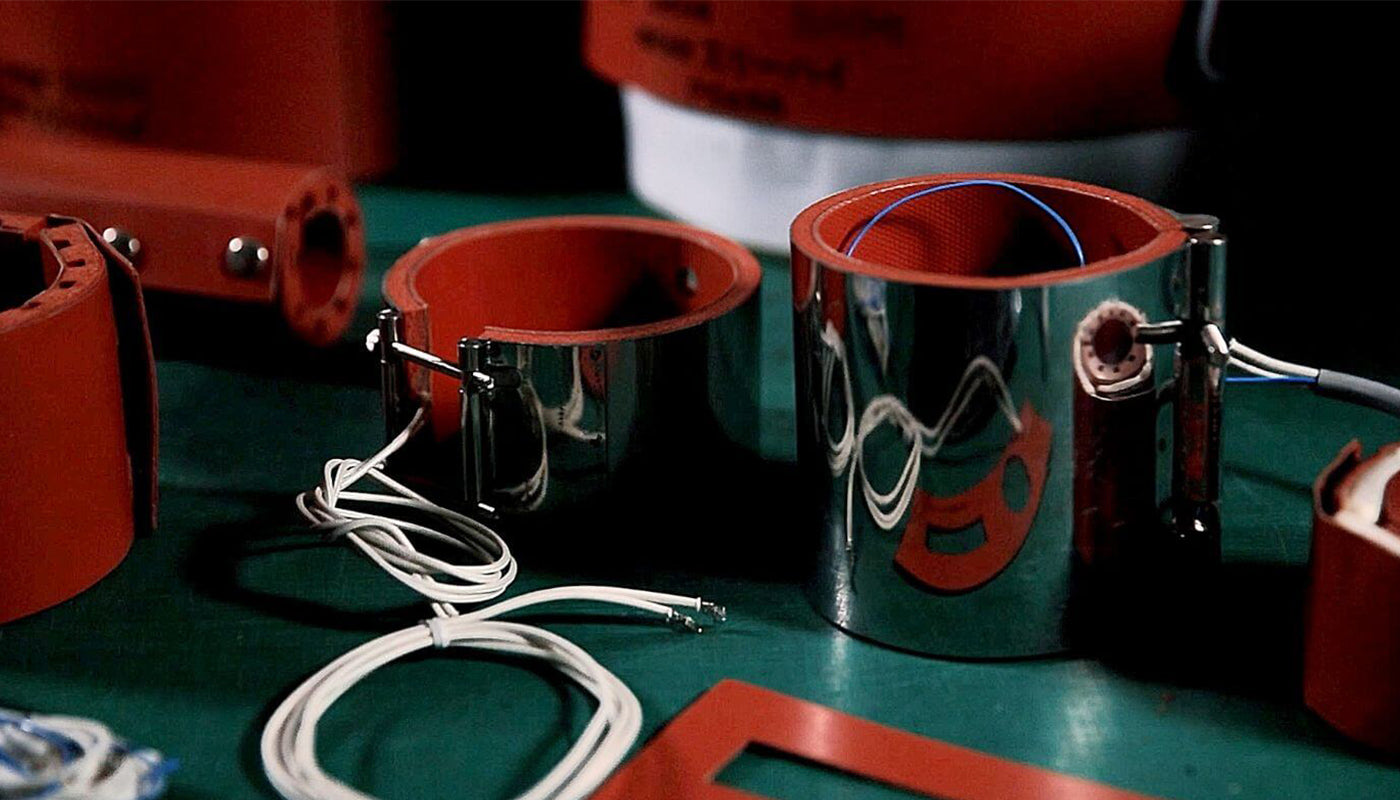
So, this time we designed a circular heater with a diameter that would fit perfectly into your rice cooker, and by using silicone sponge, we were able to distribute heat evenly while softening the contact with the bottom.We also integrated a temperature sensor, which allows us to maintain a stable set temperature of 44-46°C.
Additionally, we selected a connector that is as small and easy to attach and detach as possible to match the size of the hole through which the cord passes, making it easy to remove the heater for cleaning and maintenance.
During the design stage, we created an image of the finished product and shared it visually, explaining, "It will fit in this position with this size." When communicating with overseas clients, it is extremely important to reach a consensus not only through words but also through diagrams. As a result, we were able to gain a clear understanding and consent from the client at this stage.

Contents of the proposed product
The proposed configuration is as follows:
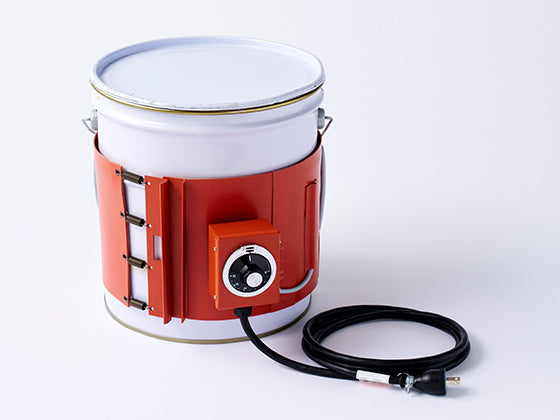
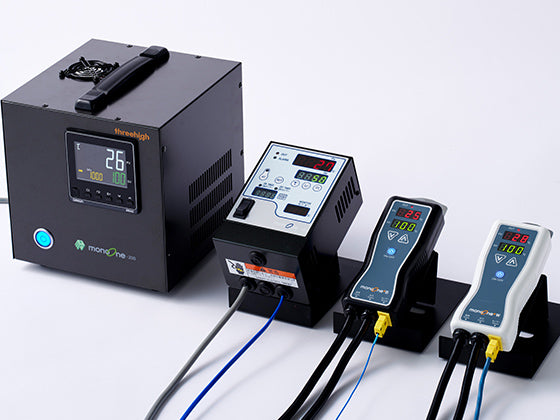
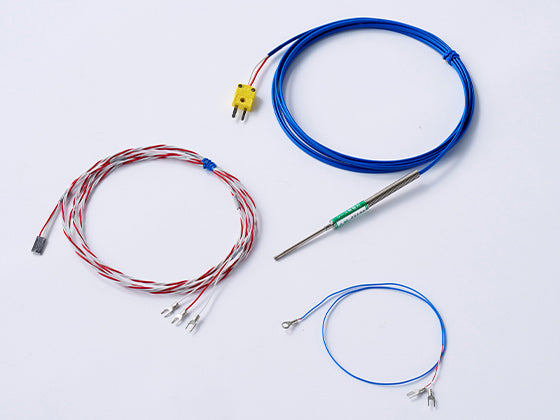
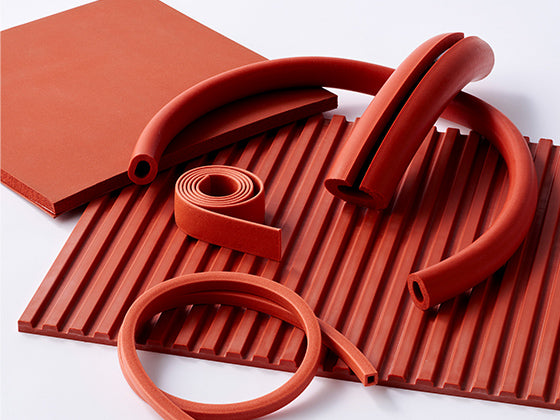
The silicone rubber heater is a round, custom-sized heater made of silicone sponge with a temperature sensor. Temperature control is achieved by combining it with the "monoOne-120" temperature controller (with cord and plug).
It is compatible with the 110V power supply in the US, and power consumption has been kept to approximately 50W as requested. If you use it for about four hours a day, it is designed to be reasonably power-efficient.
Key points of the proposed product and customer evaluation
After installation, the heater fit perfectly into the customer's rice container and has been used without any problems as expected. The temperature of the rice has also stabilized, and the customer said they no longer need to worry about temperature fluctuations during business hours.
What made the biggest impression on us was the comment that "It's just as easy to use as the insulated rice container we were using before, or even easier." We started out in a negative situation where ready-made products were no longer available, but in the end, we were able to evolve it into a form that better fits the on-site operations.
We also heard that our customer's restaurant was highly acclaimed and even won a star in the Michelin Guide, and we felt very happy to have been able to support that, even if it was just a behind-the-scenes product like a heater. The main focus is always the food and the craftsmanship, but we would be pleased if we could have contributed to creating an environment that consistently supports that quality.
For those who are having trouble finding ready-made products
This case shows that "there is no ready-made product" does not mean "the problem cannot be solved." As in this case, Three High is able to design and manufacture custom heaters one by one, tailored to the customer's usage environment, including size, shape, voltage, and temperature conditions.
Whether in Japan or overseas, if you are having trouble with food-related equipment, heat retention, or temperature control, we are happy to help you, even if you are just wondering, "Is it possible to use it like this?" We will carefully organize the on-site conditions and propose a practical solution in the shortest possible time.
It's not often that our products take center stage, but the value we strive for is for things to "just work as a matter of course" in the field. We hope to continue to accumulate examples where we can help achieve this, like this case with the sushi restaurant in Dallas.
■Thank you for your cooperation in writing this article.
Tatsu Dallas
https://www.tatsu-dallas.com/